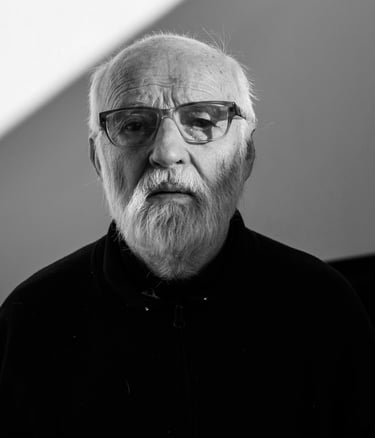
Jan Švankmajer is a dominant figure in the field of global animation cinema, even more so today, as the widespread perception is gradually taking hold that the distinction between animated film and “live-action” cinema has become so blurred as to cast doubt on its legitimacy. Born in Czechoslovakia, his work must be considered in relation to his distinguished compatriots: in animation, the obvious references are Jiří Trnka, Karel Zeman, Hermína Týrlová, and the younger Jiří Barta; within the broader context of national cinema, one must also recall the generation known as the “Czech New Wave” (nová vlna): Oscar winners Miloš Forman (Black Peter, 1964; Loves of a Blonde, 1965), Jiří Menzel (Closely Watched Trains, 1966), and Věra Chytilová (Daisies, 1966). A fellow student of Švankmajer at the Theatre Faculty of the Academy of Performing Arts in Prague was Juraj Herz, director of The Cremator (1969). The first twenty years of his production are marked by animated and mixed-media short films, with a forced hiatus from directing in the 1970s due to censorship following the repression of the Prague Spring. Starting in 1988 with Alice (1988), his focus shifted to feature-length films, with a reduced presence of animation within them, without losing any of their evocative power.
Jan Švankmajer
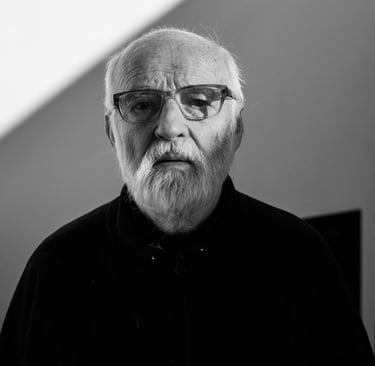
Projections:
↘ Cinema Dante, Mestre (VE) | 15.04 (86’) ↘ Alice
↘ Retrospective: Short Films Pt. 1 - Auditorium | 17.04, ↘ A Game with Stones ↘ J.S. Bach – Fantasia in G minor ↘ Punch and Judy; Et cetera ↘ Historia Naturae ↘ The Flat; Picnic with Weismann ↘ A Quiet Week in the House
↘ Retrospective: Short Films Pt. 2 - Auditorium | 18.04 ↘ Jabberwocky ↘ Leonardo’s Diary ↘ The Castle of Otranto ↘ The Fall of the House of Usher ↘ Dimensions of Dialogue
↘ Retrospective: Short Films Pt. 3 - Auditorium | 19.04 ↘ Down to the Cellar ↘ The Pendulum, the Pit and Hope ↘ Another Kind of Love; Virile Games ↘ Flora; Darkness–Light–Darkness ↘ Meat Love ↘ The Death of Stalinism in Bohemia ↘ The Food
Among his later shorts are also international co-productions such as Another Kind of Love (1988) and Meat Love (1989) for MTV, and The Death of Stalinism in Bohemia (1990), produced with the support of the BBC. A technically versatile artist, he is also a painter, sculptor, and puppeteer. His poetics are surrealist, centered on everyday objects—particularly food, toys, and curious items—which, removed from their usual context, are combined into dreamlike sequences through the use of tight, repetitive editing, at times even unsettling. What emerges is an ironic, irreverent, and direct vision, tinged with a vein of bitterness. A hidden connection links him to other famous figures from Prague: not only Franz Kafka, but also Emperor Rudolf II of Habsburg (1552–1612), who made the city on the Vltava a capital of occultism and esotericism. His famed Wunderkammer, a collection of natural curiosities and unusual objects, contributed to the myth of Prague as a city of mystery and magic. It is no coincidence that a recurring theme in some of Švankmajer’s short films—true Wunderkammern on film—is the human figure composed of various objects, somewhat like the paintings of Arcimboldo, of whom Rudolf II was a patron.
Jan Švankmajer è una figura dominante nel panorama del cinema d'animazione mondiale, oggi più che mai, mentre si fa strada la percezione diffusa che la distinzione tra cinema d'animazione e cinema dal vero sia divenuta così sfumata da metterne in dubbio la legittimità. Nato in Cecoslovacchia, la sua opera va considerata in relazione a quella dei suoi illustri connazionali: nell'animazione, i riferimenti d'obbligo sono Jiří Trnka, Karel Zeman, Hermína Týrlová e il più giovane Jiří Barta; nel quadro più ampio della cinematografia nazionale, occorre ricordare anche la generazione nota come la «Nouvelle Vague ceca» (Nová vlna): i premi Oscar Miloš Forman (L'asso di picche, 1964; Gli amori di una bionda, 1965), Jiří Menzel (Treni strettamente sorvegliati, 1966) e Věra Chytilová (Le margheritine, 1966). Compagno di studi di Švankmajer alla Facoltà di Teatro dell'Accademia delle Arti dello Spettacolo di Praga fu Juraj Herz, regista de L'infiltrato / L'uomo che bruciava i cadaveri(The Cremator, 1969). I primi vent'anni della sua produzione sono scanditi da cortometraggi d'animazione e a tecnica mista, con una pausa forzata dalla regia negli anni Settanta a causa della censura seguita alla repressione della Primavera di Praga. A partire dal 1988 con Alice, la sua attenzione si è spostata sui lungometraggi, caratterizzati da una presenza più ridotta dell'animazione al loro interno, senza che questa perdesse nulla della propria forza evocativa.
Tra i suoi cortometraggi più tardi figurano anche coproduzioni internazionali come Another Kind of Love (1988) e Meat Love (1989) per MTV, oltre a La morte dello stalinismo in Boemia (The Death of Stalinism in Bohemia, 1990), realizzato con il sostegno della BBC. Artista tecnicamente versatile, è anche pittore, scultore e burattinaio. La sua poetica è surrealista, incentrata su oggetti d’uso quotidiano — in particolare cibo, giocattoli e bizzarrie — che, sottratti al loro contesto abituale, vengono combinati in sequenze oniriche attraverso un montaggio serrato e iterativo, a tratti persino perturbante. Ne emerge una visione ironica, irriverente e diretta, venata da un fondo di amarezza. Un legame sotterraneo lo unisce ad altre celebri figure praghesi: non solo Franz Kafka, ma anche l’imperatore Rodolfo II d’Asburgo (1552–1612), che fece della città sulla Moldava una capitale dell’occultismo e dell’esoterismo. La sua celebre Wunderkammer, una collezione di curiosità naturali e oggetti singolari, contribuì al mito di Praga come città del mistero e della magia. Non è un caso che un motivo ricorrente in alcuni corti di Švankmajer — autentiche camere delle meraviglie su pellicola — sia la figura umana composta da oggetti eterogenei, un po’ come nei dipinti di Arcimboldo, di cui Rodolfo II fu proprio mecenate.
Jan Švankmajer is a dominant figure in the field of global animation cinema, even more so today, as the widespread perception is gradually taking hold that the distinction between animated film and “live-action” cinema has become so blurred as to cast doubt on its legitimacy.
Born in Czechoslovakia, his work must be considered in relation to his distinguished compatriots: in animation, the obvious references are Jiří Trnka, Karel Zeman, Hermína Týrlová, and the younger Jiří Barta; within the broader context of national cinema, one must also recall the generation known as the “Czech New Wave” (nová vlna): Oscar winners Miloš Forman (Black Peter, 1964; Loves of a Blonde, 1965), Jiří Menzel (Closely Watched Trains, 1966), and Věra Chytilová (Daisies, 1966). A fellow student of Švankmajer at the Theatre Faculty of the Academy of Performing Arts in Prague was Juraj Herz, director of The Cremator (1969). The first twenty years of his production are marked by animated and mixed-media short films, with a forced hiatus from directing in the 1970s due to censorship following the repression of the Prague Spring. Starting in 1988 with Alice (1988), his focus shifted to feature-length films, with a reduced presence of animation within them, without losing any of their evocative power.
Jan Švankmajer
↘ Cinema Dante, Mestre (VE) | 15.04 h. 21:00 (86’) ↘ Alice
↘ Retrospective: Short Films Pt. 1 - Auditorium | 17.04, h. 16:30 ↘ A Game with Stones ↘ J.S. Bach – Fantasia in G minor ↘ Punch and Judy; Et cetera ↘ Historia Naturae ↘ The Flat; Picnic with Weismann ↘ A Quiet Week in the House
↘ Retrospective: Short Films Pt. 2 - Auditorium | 18.04, h. 11:45 ↘ Jabberwocky ↘ Leonardo’s Diary ↘ The Castle of Otranto ↘ The Fall of the House of Usher ↘ Dimensions of Dialogue
↘ Retrospective: Short Films Pt. 3 - Auditorium | 19.04, h. 11:45 ↘ Down to the Cellar ↘ The Pendulum, the Pit and Hope ↘ Another Kind of Love; Virile Games ↘ Flora; Darkness–Light–Darkness ↘ Meat Love ↘ The Death of Stalinism in Bohemia ↘ The Food
Among his later shorts are also international co-productions such as Another Kind of Love (1988) and Meat Love (1989) for MTV, and The Death of Stalinism in Bohemia (1990), produced with the support of the BBC. A technically versatile artist, he is also a painter, sculptor, and puppeteer. His poetics are surrealist, centered on everyday objects—particularly food, toys, and curious items—which, removed from their usual context, are combined into dreamlike sequences through the use of tight, repetitive editing, at times even unsettling. What emerges is an ironic, irreverent, and direct vision, tinged with a vein of bitterness. A hidden connection links him to other famous figures from Prague: not only Franz Kafka, but also Emperor Rudolf II of Habsburg (1552–1612), who made the city on the Vltava a capital of occultism and esotericism. His famed Wunderkammer, a collection of natural curiosities and unusual objects, contributed to the myth of Prague as a city of mystery and magic. It is no coincidence that a recurring theme in some of Švankmajer’s short films—true Wunderkammern on film—is the human figure composed of various objects, somewhat like the paintings of Arcimboldo, of whom Rudolf II was a patron.
Projections: